1.5.1.2Operations
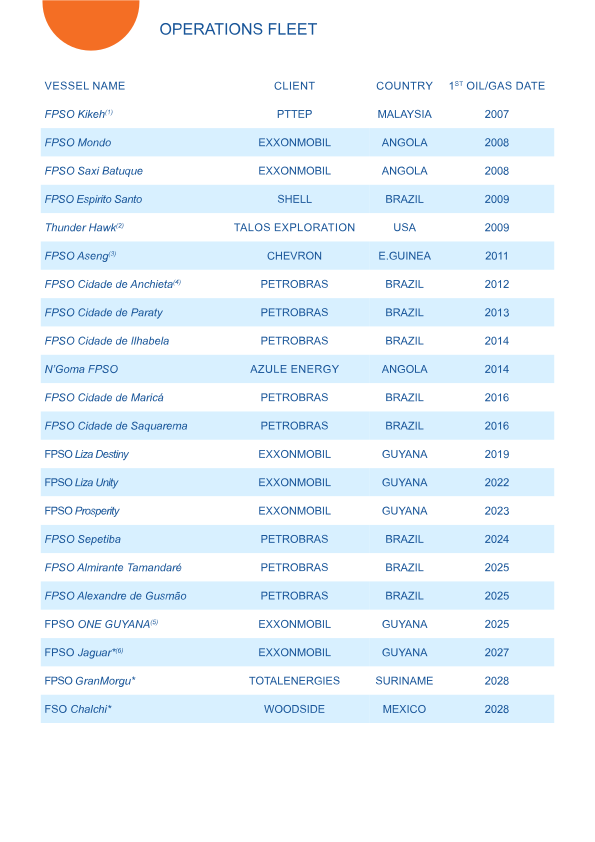
An experienced workforce comprising more than 4,100 personnel ensures the safe, reliable and efficient operation of SBM Offshore’s offshore assets, generating predictable and sustainable revenue and operating cash-flows for the business. The fleet encompasses 16 FPSOs, geographically distributed around the Atlantic Basin, aiming to provide traditional hydrocarbon energy with the lowest possible carbon emissions during the production phase.
Key to this are policies, commitments and mechanisms described in sections 3.3.2 and 1.5, with a sharp focus on continuous improvement. This is achieved by identifying opportunities for improvement and embedding lessons learned into SBM Offshore’s Group Enterprise Management System (GEMS) and Group Technical Standards (GTS). As a subset of GEMS, SBM Offshore is advancing the ’Manage Assets on a Page’ (MAP) project, an adaptive framework based on Plan-Do-Check-Act (PDCA) methodology, to strengthen governance within the fleet operations.
The SBM Offshore fleet had the following historic performance:
- Over 8.2 billion barrels of production cumulatively to date;
- 12,233 oil offloads cumulatively to date;
- 419.7 cumulative contract years of operational experience1.
SBM Offshore employs a proactive, risk-based approach to asset management, leveraging digital reliability and integrity solutions to automate surveillance. This enables an optimized deployment of resources and increased efficiency and availability of safety, production and marine systems. To ensure that SBM Offshore’s activities have a positive impact on the local communities in which SBM Offshore is present, the fleet has several programs aligned with the Material Topics focused on well-being and personnel development, emissions reduction and environmental protection.
2025 Performance
HSSE and Process Safety Performance
In 2025, three new units entered into operation sustaining a high volume of activity, as observed in the previous years. SBM Offshore maintains its record of zero Fatalities and Permanent Injuries (FPI). This performance reflects the robustness of the HSSE management system and the increased focus on preventing high-potential incidents.
Initiatives to enhance operational safety, process safety, quality and efficiency continued throughout the year:
- Continued focus on process safety management, including piloting a live bow-tie barrier model;
- Strengthening governance and assurance;
- Developing safety programs aligned with industry best practices including human performance.
Development of Operations
Brazil
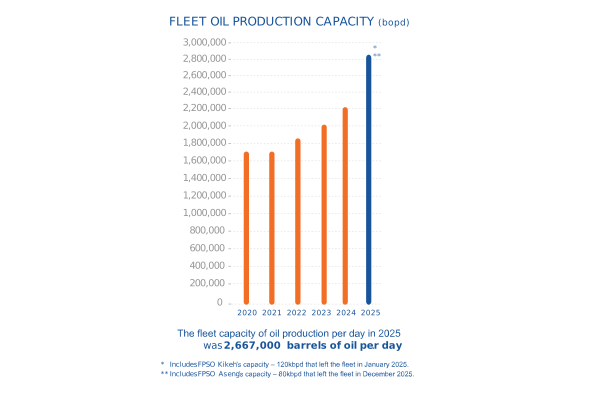
- FPSO Almirante Tamandaré, with an initial production capacity of 225,000 barrels of oil per day, successfully underwent debottlenecking, allowing it to reach peak production of 270,000 barrels of oil per day, making it the highest-ever producing asset in Brazil.
- FPSO Alexandre de Gusmão achieved first oil on May 24, 2025. Production ramp-up continues at a steady pace.
- The remaining Brazilian fleet continued to deliver strong performance with robust reliability, reflecting both asset maturity and resilience.
- The decommissioning of FPSO Capixaba continues in Frederikshaven, Denmark. The responsible recycling project advances at a steady pace, following through the equipment removal, disposal and dismantling stages.
Guyana
- Three FPSOs, Liza Destiny, Liza Unity and Prosperity, continue safe and strong production.
- FPSO Liza Unity achieved production of 270,000 barrels of oil per day.
- FPSO ONE GUYANA arrived in country and achieved first oil on August 8, 2025.
Angola
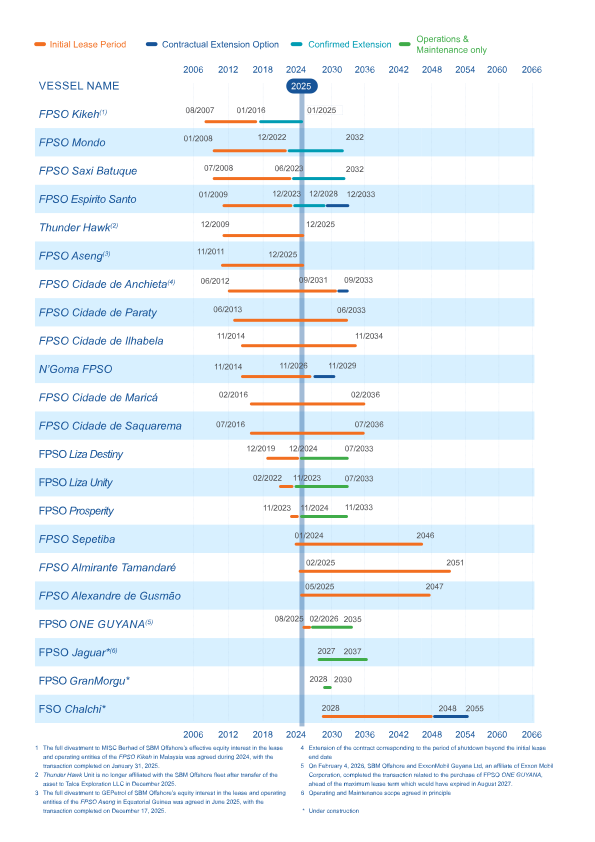
- In Angola, SBM Offshore signed an extension of contract until 2032 for FPSO Saxi Batuque and FPSO Mondo.
SBM Offshore has pursued four different transactions with the aim of maintaining focus and excellence in its operating portfolio:
- FPSO Kikeh officially departed from the SBM Offshore fleet after SBM Offshore and MISC Berhad concluded the final agreement on January 31, 2025.
- FPSO Esprito Santo: SBM Offshore completed the full acquisition of the equity interest from MISC Berhad of the lease and operating entities related to the FPSO.
- FPSO Aseng exited the SBM Offshore fleet after SBM Offshore and GEPetrol completed the transaction related to the Share Purchase Agreement on December 17, 2025.
- Thunder Hawk Unit is no longer affiliated with the SBM Offshore fleet after transfer of the asset to Talos Exploration LLC.
Brownfield Project Services
Brownfield Project Services (BPS) is now well-established and positioned as a complement and support to SBM Offshore operations in expanding the offer of full life cycle asset management services. The main achievements for 2025 were:
- Significant brownfield activities undertaken on the Guyana fleet’s water injection systems to ensure long-term integrity.
- Projects to increase the Persons on Board (POB) on multiple Brazilian FPSOs enable sustainable and economical long-term integrity of the assets. POB increase has been achieved on FPSO Cidade de Anchieta and is ongoing on FPSO Cidade de Paraty and FPSO Cidade de Ilhabela.
- Completion of the Kizomba C Life Extension Front-End Engineering Design (FEED), establishing the project scope, execution plan, and budget. The study enabled ExxonMobil’s life-extension decision, leading to the extended operations contracts for the Kizomba C FPSOs (Saxi Batuque and Mondo) through 2032. This initiative represents SBM Offshore’s largest brownfield project to date.
Asset management
As offshore installations age, the original coating systems become less effective, leading to an increase in the integrity scope over time. Capacity to accommodate resources onboard is limited, and maintaining the integrity of aging assets is a significant challenge for the industry.
Throughout 2025, major progress was made to ensure long-term reliability and integrity of SBM Offshore’s fleet. SBM Offshore continued to focus on preserving the asset condition and optimizing the balance between capacity and workload with innovative ways of working and technologies. Preservation and fabric maintenance activities continue to be a key priority to maintain the condition of assets, along with a broad array of initiatives focused on the enrichment and reduction of maintenance tasks. Improved integrity and inspections strategies successfully improved efficiency and productivity.
Focusing on accurate, fleetwide planning for the maintenance campaigns improved decision-making throughout the lifecycle of the assets. Simultaneously, technology is actively used to increase productivity and optimize the focus of people onboard. These efforts are strengthening SBM Offshore’s position in risk management, driving efficient asset management and minimizing personnel exposure.
Responsible recycling
SBM Offshore is committed to safe, environmentally sound asset recycling performed in full compliance with SBM Offshore’s Responsible Recycling Policy. The policy applies – amongst others – the principles of the EU Ship Recycling Regulation 1257/2013 or equivalent. The recycling of the FPSO Capixaba is progressing according to plan and in line with SBM Offshore’s policies and leading industry standards. Completion is expected in 2026, with best practices and reuse of materials.
Future
During 2026, SBM Offshore will concentrate on operational stability, fleet efficiency and uptime of the new generation of FPSOs with the aim to improve cash generation and deliver SBM Offshore’s backlog.
With new units joining the fleet in the coming years, SBM Offshore will advance its efforts to secure operational readiness in the new portfolio countries where growth both onshore and offshore are expected. Building operational capability in Mexico and Suriname will continue to be a priority, with a special focus on initiatives involving social and environmental projects and an established organizational framework.
SBM Offshore is reinforcing the journey of digital enablement throughout the organization. Solutions for fleet operational performance optimization will continue to be utilized and further developed. Technology applications have been deployed and will be further expanded fleetwide to optimize human resources in priority scopes. For example, using robotics technology to minimize human exposure to risks onboard supports the ambition to continuously improve integrity and reliability activities.