3.1.4Double materiality
ESRS 2 GOV-4; SBM-1; SBM-2; SBM-3; IRO-1; IRO-2, and ESRS E1; S1; S2; G1
SBM Offshore is strengthening its approach to data governance, target setting, reporting practices and performance management, having made significant progress over the past decade.
The materiality assessments are central to SBM Offshore’s sustainability strategy. These assessments identify the most significant environmental, social, governance and economic topics that could impact SBM Offshore’s operations and/or its stakeholders, as well as the associated risks and opportunities. This process enables the understanding and integration of stakeholder interests into DMA and sustainability reporting decision-making.
SBM Offshore reviews its materiality assessment every four years, adapting to evolving ESG risks, regulations, and stakeholder expectations while confirming that sustainability efforts remain strategic and effective. In the interim, regular updates are conducted to capture critical changes in external conditions and ESG factors. The outcomes of the materiality assessment are validated by the Management Board, supporting the use of its findings to inform the organization’s strategic direction and performance management.
PROCESS
In 2023, SBM Offshore conducted a materiality assessment aligned with the double materiality principle emphasized by the CSRD. This process involved identifying and evaluating material impacts, risks and opportunities across SBM Offshore’s operations and value chain, considering both impact and financial perspectives to determine whether each sustainability matter was material from one or both dimensions1.
The assessment incorporated insights from interactions with key internal and external stakeholders carried out specifically for the DMA process, alongside knowledge acquired through project-specific Environmental Impact Assessments (EIAs), due diligence, climate risk assessments and other processes. The findings from these interactions and assessments guided SBM Offshore to identify, evaluate and manage impacts, risks and opportunities within its value chain.
The DMA process was validated by independent external experts in 2023, strengthening its robustness and credibility (for a brief description of the DMA process, see section 3.7.1). The outcome of this process was applied in 2024. A subsequent review in 2025 confirmed the continued relevance of the conclusions reached and the material topics defined.
SBM Offshore’s six material topics – together with their associated impacts, risks, opportunities, policies, actions, and targets – are disclosed in this report in accordance with ESRS topical and cross-cutting standards.
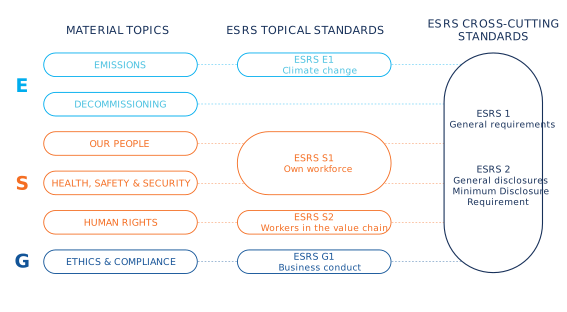
SBM Offshore has assessed various environmental and social topics in its DMA, including pollution (ESRS E2), water and marine resources (ESRS E3), biodiversity and ecosystems1 (ESRS E4), resource use and circular economy (ESRS E5), affected communities (ESRS S3), and consumers and end-users (ESRS S4). SBM Offshore concluded that these topics are not standalone material matters for its operations or stakeholders.